
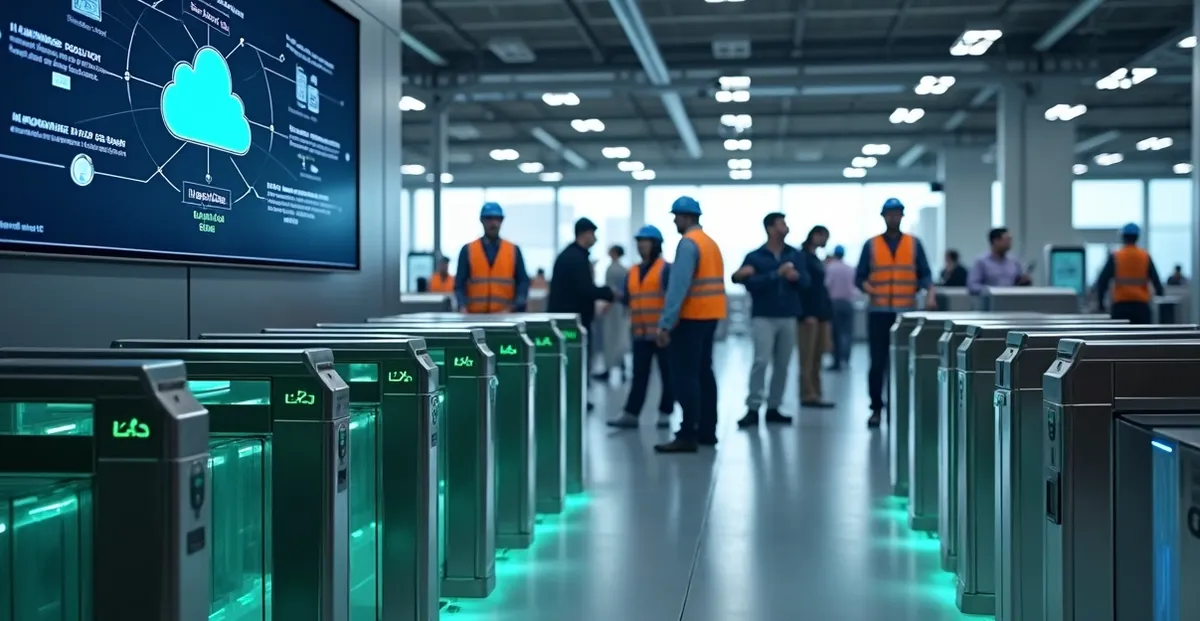
As companies pursue innovation, moving access control management to the cloud is becoming a reality at large corporations. Automating flows, bringing digital security and gaining flexibility are some of the reasons leading factories, logistics centers and corporate operations to consider technology change in this strategic area. .
Below are essential guidelines for making the move of entry and exit management to an online environment more secure!
1. Detailed strategic planning: the starting point
Before starting any migration, the first step is to look inward. What is the current flow of people, outsourced companies and vehicles? Which areas are restricted, which documents are required for entry, who approves or rejects access?
Gathering that information makes it easier to identify bottlenecks and opportunities for improvement. Having a documented inventory of access allows you to map vulnerabilities and ensure the migration project rests on solid foundations.
RainbowTec recommends following these stages:
- Review of current permissions for users, outsourced companies and contractors.
- Identification of legacy systems used for entry and exit records.
- Listing of the integrations needed with physical equipment, such as turnstiles and barriers.
- Assessment of internal and sector policies on security and compliance.
These actions reduce the risk of losing information and support operational continuity during the move to the cloud system.
2. Assessing the security and privacy of corporate data
When control is no longer restricted to the company's physical or local environment but comes to be accessed online, protecting the information gains an extra layer of attention. Sensitive data on employees, visitors and third parties needs to be protected against leaks, external attacks or improper use.
The RainbowTec system uses data encryption, user authentication and constant monitoring to ensure only authorized people can view, edit or approve registrations and access. The same should be sought in any transition to the cloud.
- Look for solutions that offer automatic backups, version control and detailed logging of every action in the system.
- Implement clear password management policies and multi-factor authentication to make unauthorized access harder.
- Training workers to identify digital threats is a stage that should not be ignored.
3. Ensuring compliance with standards and legislation
Industry and logistics operations are subject to multiple legal obligations, such as labor, social security and tax standards and, in many cases, international security rules.
Moving control to the cloud has to ensure traceability and compliance with those requirements. Automating document checking avoids exposure to risks such as expired permissions, outdated information or missing mandatory certificates.
The RainbowTec system, for example, validates documents with the support of artificial intelligence, allowing audits and the generation of reports that meet tax and legal procedures.
Another point is that the solution needs to offer flexibility to adapt quickly to regulatory or internal changes, with easy updating of requirements and integration of sector-specific policies.
4. Choosing reliable technology suppliers
The market offers diverse options, but choosing partners with proven experience in cloud and security is indispensable. Assess the suppliers' background, study cases, look for quality certifications and references for corporate service in high-flow, high-risk operations.
RainbowTec highlights some essential questions when assessing a supplier:
- Is the system hosted on high-availability infrastructure with continuous monitoring?
- Is there a contingency plan for failures or service outages?
- What is the technical support response time?
- Does the supplier apply security updates regularly?
Avoiding surprises in the future depends on a good analysis of the chosen partner's track record and commitment.
5. Automating document validation for third parties and visitors
Automation reduces repetitive tasks and human error in document checking. In practice, when moving entry and exit control to the cloud, the company can require the supplier to submit current documents directly in the system, speeding up approvals and avoiding piles of paperwork.
RainbowTec, for example, uses artificial intelligence to check and approve or reject registrations in a few seconds.
With that, managers can follow the status in real time and analyze only the exceptional cases, optimizing internal resources and freeing teams for more strategic functions.
The gain is clear: less bureaucracy, more speed, and reduced legal risk for the organization.
6. Complete integration with physical systems: turnstiles, barriers and gates
The real potential of digital control only shows itself when the cloud system talks fluidly to physical equipment. Having an up-to-date registration online is not enough if, at the gate, the turnstile does not stop someone who is irregular.
During migration, the planning needs to include detailed testing of integrations, ensuring the digital panel faithfully reflects who can or cannot enter according to their registration status.
RainbowTec has already shown that integration with turnstiles, barriers and gates ensures security and efficiency, as well as full traceability in audits.
That automation simplifies the entry of third parties, visitors and contractors, reducing queues, awkwardness and potential operational risk.
7. Testing, monitoring and continuous adjustment
The process of adapting to the new system does not end after the first access is granted. It is fundamental to create routines for testing, monitoring flows and reviewing failures. Collecting feedback from the operational teams, security and administration helps identify opportunities to adjust.
Use the reports the system generates to track key indicators, such as approval times, the number of automatic rejections and occurrences at the gates. From that analysis, updates can be made to processes, the standards of documents required and integration with new systems and restricted areas.
8. Training and internal communication
Finally, moving to the cloud only works fully when everyone understands their responsibilities and knows how to act at each stage of the new process. Invest in quick training, clear manuals and communication channels between administrative teams, suppliers, managers and asset protection.
By moving access control to the cloud, companies extend physical and digital security, ensure legal compliance and reduce manual effort.
By following the precautions set out in this article, with an emphasis on strategic planning, choosing serious suppliers, document automation, integration between systems and team training, the company gains more control and efficiency.
In the RainbowTec environment, that is already how it works: faster, more transparent and more reliable processes, always aligned with internal and market standards.
Get in touch with RainbowTec to see up close how your company can improve management, security and compliance by moving entry and exit control to the cloud.
Frequently asked questions
What is cloud access control?
Cloud access control means managing entry and exit authorizations for people, vehicles and outsourced companies through online systems. All the information is centralized digitally, allowing approvals, blocks and monitoring in real time from any location.
How do you migrate access control securely?
To migrate securely, you should map the current picture, choose a reliable solution, ensure data protection, train workers and test physical integrations with gatehouses and equipment. Support from specialists, such as RainbowTec's, reduces risk in that process.
What are the main risks of migration?
The main risks relate to data loss, integration failures, exposure of sensitive information and breaches of legal standards. Using robust systems, with strong authentication and document automation, helps minimize those risks.
How much does migrating access control cost?
The cost varies with the size of the company, the number of access events, the level of automation, the integrations desired and the technical support needed. Investing in the right technology can represent savings by avoiding losses, labor lawsuits and security failures.
Is cloud access control worth using?
Yes, especially for companies dealing with a large flow of third parties, contractors and visitors. The cloud offers speed, flexibility and stricter control, as well as alignment with security and compliance best practice.