
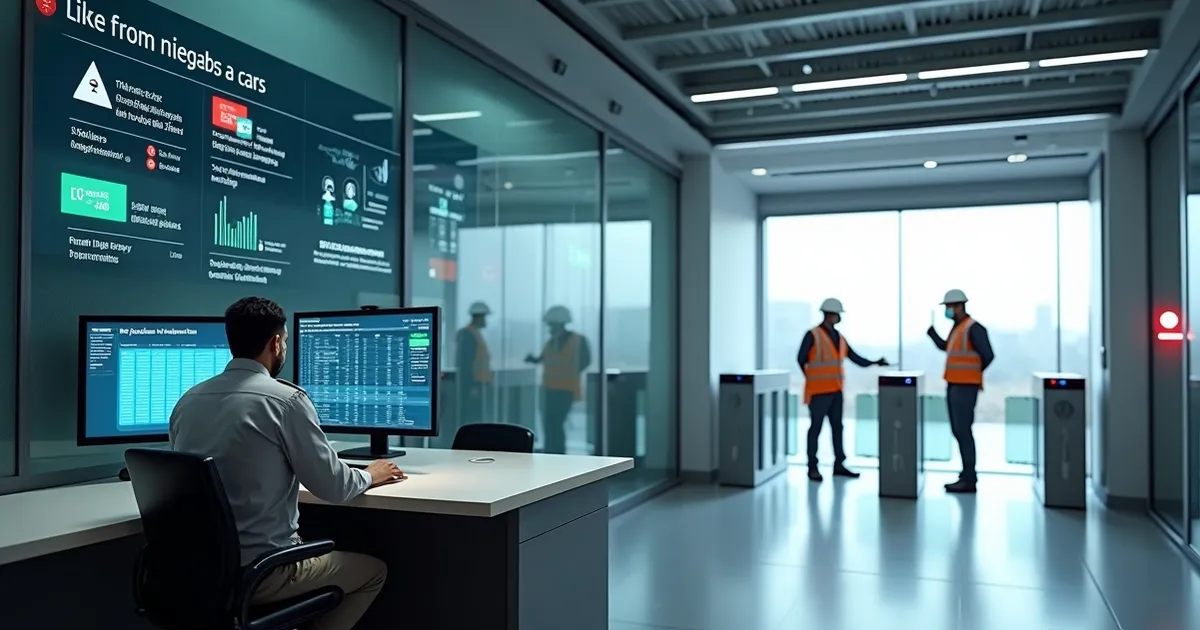
In the industrial context, adapting internal systems to biosafety standards is an increasingly visible necessity. After all, environments with heavy movement of people, suppliers and vehicles require rigorous care to ensure the safety and health of everyone involved.
Companies across every industrial segment have found that following manual procedures alone does not keep pace with the rhythm or the precision of current requirements. That is why combining technology, efficient management and automated processes has been the safest and most reliable path.
Discover now how to integrate digital processes, access control and supplier tracking to achieve compliance with the standards and avoid setbacks!
Links between biosafety, legislation and daily operations
Observing health guidelines in industry is not merely a recommendation but an obligation backed by federal and state legislation and technical standards.
Documents such as the regulatory standards on occupational health and safety in health services and on personal protective equipment, plus health authority resolutions, are only examples of the regulations that must be considered.
Noncompliance can result in heavy fines, risks to workers' health and even the shutdown of activities. Industrial routine involves tracking and ensuring everyone follows access and circulation rules based on specific health guidelines.
That applies not only to a company's own workers but particularly to service providers, visitors and suppliers. Keeping information current is a frequent requirement in audits and risk assessments.
Legal requirements and documentation in industrial biosafety
Each type of industry will have additional requirements according to its sector, but generally the points below recur in Brazilian legislation and health standards:
- Supporting documentation of vaccination and periodic health exams.
- Presentation and validation of training in safety and health protocols.
- Control of the validity of personal protective equipment and its approval certificates.
- Management of the flow of people and vehicles in and out of restricted areas.
- Automated tracking of expiry dates and outstanding documents.
A failure in any of these items can compromise the whole operation or even put lives at risk. Such requirements are frequently checked by inspections from the labor ministry, health surveillance authorities and sector bodies.
In operations dealing with biological materials, waste or the handling of hazardous substances, the rigor is greater still. Effective control is only possible when the manager can centralize information and automate the stages of analysis, validation and monitoring.
How digital systems strengthen biosafety
The starting point for operations shielded against health risks is digitizing management. Control software is capable of receiving, validating and updating the documents required, eliminating manual processes and information gaps.
That ensures only authorized people, duly compliant and qualified, can access critical environments of the industrial plant. Here is how digitization contributes to compliance:
- Creation of a single repository of documents (contracts, health certificates, training, equipment approval certificates).
- Automatic notification about expiries, outstanding items or missing mandatory files.
- Validation by artificial intelligence, cross-referencing information and flagging discrepancies instantly.
- Automatic release of physical access only for those whose compliance status is approved.
By employing solutions of that kind, companies are better able to face surprise audits or inspections by regulators, showing traceability of their actions and readiness to correct failures.
Integration with access control and monitoring
In the ideal scenario, data on managers, suppliers and visitors connects directly with the physical perimeter protection systems, such as turnstiles, barriers, gates and biometric devices.
That structure eliminates any opening for gaps, since it grants entry only to those who meet health and legal prerequisites. Real-time monitoring completes the cycle.
The security team not only sees who entered and left but also receives automatic alerts about irregularities. In the event of an access attempt by irregular third parties or with expired documentation, there is immediate blocking and a management notification.
An automatic, transparent and always-current base brings speed to operations, keeping workers aware of their responsibility throughout the journey.
Managing third parties: challenges and solutions
Managing third parties requires not just an initial check but constant follow-up. Companies report that the greatest difficulty is keeping suppliers up to date with mandatory documentation and proof of training.
Keeping lists in spreadsheets or physical folders is no longer enough given the turnover and the large volume of information. A digital platform supports self-service by suppliers, centralizing the data and reducing manual work for the internal team.
Third parties themselves submit and monitor the documents through the system and receive automatic responses on approval, rejection or outstanding items. That reduces delays and improves the relationship with partners.
- Access to sensitive areas restricted to those who meet previously established rules;
- Speed in updating documents in case of new legal or emergency requirements;
- Reduction of human error, since processes are standardized and auditable.
That model offers full traceability of access and reinforces the culture of prevention, safety and control within the company.
Trends: artificial intelligence and regulatory automation
Some managers comment that the arrival of artificial intelligence in management processes brought a new dynamic.
Advanced algorithms can analyze large volumes of files and identify insufficient, expired or inconsistent documents in seconds. That significantly reduces the risk of nonconformity through oversight or human error.
Another point specialists highlight is the growth of API integrations between internal management systems and the plant's physical access controls. The flow of information becomes continuous, transparent and ready to answer an inspection at any moment, with no need to hunt for paper files or involve multiple departments.
Adapting industrial systems to biosafety standards is an indispensable step in protecting the environment, people and the business itself. Automating and centralizing document management, creating validation routines and integrating technology with access controls ensures compliance and peace of mind in the face of inspections.
The motto is simple: keep the plant safe, efficient and ready for new health and regulatory challenges.
Follow us on social media and stay up to date on news, trends and recommendations in the world of industrial management and safety. We are on LinkedIn!
Frequently asked questions about biosafety in industry
What are industrial biosafety standards?
Industrial biosafety standards cover rules, procedures and laws aimed at protecting the integrity and health of people and of the environment within industrial units. They establish criteria for controlling biological risk, handling materials safely and creating health protocols in different sectors.
How do you adapt systems to biosafety standards?
The best way to adapt systems is to centralize the documentation of workers and third parties on secure digital platforms, automate validation of compliance with legal requirements and integrate that process with physical access control devices, such as biometric turnstiles and barriers. Real-time follow-up reduces failures and allows fast action in the face of irregularities.
Which sectors need to follow biosafety?
Sectors such as chemical, food and pharmaceutical industries, hospitals, ports, large-scale construction, mining and plants with intense third-party circulation should follow strict biosafety protocols to avoid health risks and ensure regular operations.
How much does implementing biosafety standards cost?
The investment varies with the size of the company, the number of workers, the complexity of the processes and the types of risk involved. Direct costs involve contracting digital platforms, training teams and any physical work to adapt access points. On the other hand, the costs of noncompliance tend to be higher, considering possible fines and shutdowns.
Where can you find industrial biosafety consultancy?
Consultancies specializing in industrial management, safety engineering, occupational health and compliance offer guidance, training and support so the company meets every obligation relating to biosafety. It is advisable to look for firms with proven experience and recognition in audits to assess the processes and recommend improvements suited to the operational profile.