
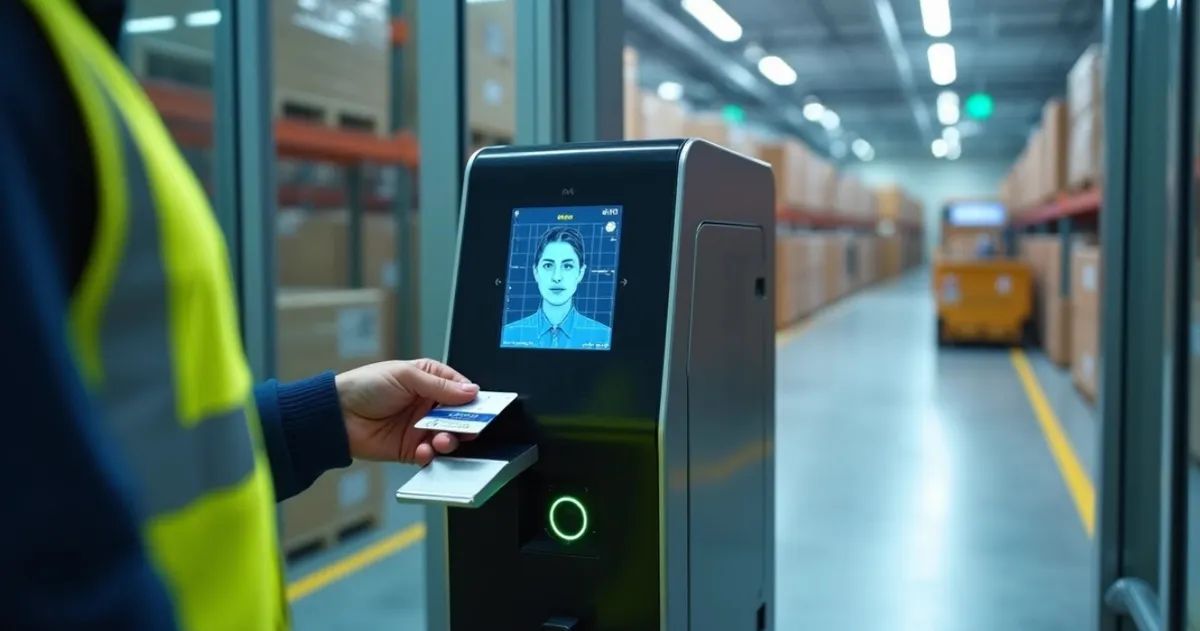
Biometrics has secured a permanent place in environments where physical security, compliance and traceability are mandatory. Integrating biometric recognition with physical credentials such as cards or badges creates multiple barriers, making access control even more robust.
The step-by-step process of combining biometric authentication with physical media may look complex, but each stage has a practical role in ensuring security, regularity and automation.
Here is how the union of biometric recognition and tangible credentials is moving towards a new standard in corporate access management.
Understanding the integration: biometrics and physical credential
Before moving on to installation or configuration, it is essential to understand the concept itself. The integration joins two "layers" of authentication: the reading of a unique physical characteristic (such as fingerprints or face) and a material item (card, tag, badge or RFID keyring).
This model is called multi-factor authentication, because it does not depend only on what the person has, but also on who they are.
So even if a badge is lost or stolen, it will not be possible to proceed without also authenticating the biometrics authorised by the system.
Why combine biometrics with badges in corporate environments?
Industrial and logistics environments face particular challenges: circulation of third parties, rotating teams, document checks and area restrictions. Third parties and visitors often reach sensitive locations with different levels of access.
By adopting dual verification (biometric recognition + physical credential), the organisation expands the following benefits:
- Minimises the risk of identity fraud or theft.
- Creates more complete and traceable audit trails.
- Supports compliance with labour and social security rules.
- Prevents the "lending" of a badge or card.
- Makes integration with internal systems and automated reports easier.
These points make clear that the integration not only hinders intrusion, but also protects the company legally in audits and inspections.
How do you integrate biometrics and physical cards?
Below is a detailed step-by-step guide to implementing this integration, from the start to day-to-day operation.
Choosing the technologies and devices
First, you need to define which biometric methods will be used. Fingerprint? Facial recognition? You can choose one or both, according to the level of security required and the reality of the site.
Likewise, the physical credential can take different forms: proximity card, tags, or even QR codes printed on the spot. The choice also depends on the turnstiles, barriers and gates already installed.
Biometric enrolment of users
With the technologies chosen, enrolment begins. This usually takes place at self-service stations or at specific collection points.
The user presents an identification document and then registers their biometric data: fingerprint, palm, face or another attribute.
Many systems already allow third parties (contractor companies, for example) to take part in this process by sending registration information in advance. That speeds up entry and reduces queues, particularly when external teams arrive.
Linking biometrics to the badge
After enrolment, the person responsible connects the biometrics to the physical card. This is done in the control software itself, which cross-references the data into a single record. Every time someone presents the card to the reader, the system will also request the corresponding biometric verification.
So even if the card falls into the wrong hands, entry is only released if the biometric identification matches the enrolled person. This procedure drastically reduces unauthorised access attempts.
Configuring the access devices
Now it is time to configure turnstiles, gates and barriers. The equipment needs to be compatible with both biometric readers and physical credential readers. Integration happens through the automation system, which validates permissions before granting or denying access.
It is important to test operation while still using a few profiles, making sure every event is recorded and that alerts are raised when something departs from the standard, such as badge attempts without biometrics.
Synchronising and updating permissions
In practice, permissions change: contracts expire, employees leave, areas become temporarily restricted. That is why the system needs to perform automatic updates to guarantee that only authorised people reach the right places.
As a result, the management team can control access, issue reports and act quickly in unusual cases, such as immediately blocking a third party or flagging a suspicious entry.
Is the integration for everyone?
Some people think only large companies can adopt multi-factor authentication, but scalable solutions now allow adoption by businesses of any size. With self-service processes, even visitors can obtain formal access, reducing queues, failures and manual work.
For those who want to go further, advanced integrations allow specific areas to require different methods: fingerprint for laboratories, facial for gatehouses, card for parking. Flexibility has become a priority.
By investing in protection, the company reduces legal risk and demonstrates commitment to its employees and partners. Dual verification promotes compliance and peace of mind in times of growing requirements.
How do you integrate biometrics and cards?
Based on the main experiences in industrial and logistics environments, some practical guidance can help:
- Start with a pilot project in higher-risk areas.
- Train HR and IT teams to handle questions about enrolment and permissions.
- Inform contractors about the process in advance, including documentation and applicable legislation.
- Monitor access indicators and review configurations periodically.
- Ensure secure handling of biometric data, in line with the LGPD.
In cases of audit or inspection, detailed access control reports make it easier to demonstrate accountability and due care with third parties and visitors.
Direct benefits for security and compliance
Combining biometrics with physical cards turns access control into something dynamic and auditable. Every movement generates a precise record, making incident investigation or compliance audits easier.
Among the noticeable gains are:
- Reduction of fraud in access and credential hand-offs.
- Tighter control over workers and outsourced companies.
- Immediate blocking in legal or labour situations.
- Compliance with regulators and with the LGPD.
- Speed in updating permissions in emergency situations.
Implementing biometric authentication and physical credentials together is a natural step for organisations that prioritise structural security, legal regularity and market reputation.
By carrying out biometric enrolment, integrating systems and continuously updating permissions, any company can create a secure, auditable environment that is ready for the future.
In this context, biometrics stops being a trend and becomes part of corporate daily life, raising the standard of rigour and trust among managers, teams and contractors.
Share this content on social media so that more companies learn the advantages of the integration and promote security in their operations.
Frequently asked questions about biometric integration and physical access
What is biometric authentication?
Biometric authentication means confirming someone's identity through unique characteristics such as fingerprint, face, palm or iris. Every person has a singular pattern, which makes forgery very difficult and guarantees reinforced security.
How do you integrate biometrics with a physical badge?
The integration happens in three stages: enrolling the user with biometric collection and issuing the card, linking the two in the system, and configuring the reading devices. Access is released only if the recognised card is linked to the biometric profile approved during enrolment.
What are the advantages of biometrics?
The main advantages include fewer instances of fraud, reduced labour risk, traceability of access, rapid updating of permissions and stronger compliance with legal, tax and internal rules.
Is biometrics safe for companies?
Yes, provided the company adopts secure practices for storing and using biometric data, respecting legislation such as the LGPD. Well-configured systems make access safer than relying on passwords or cards alone.
How much does it cost to implement biometrics for access?
The cost depends on the number of access points, the types of readers and integration with existing systems. In general, the investment is justified by the benefits of security, fraud prevention and a reduction in labour claims over time.