
In the corporate world, concern over the irregular contractor is constant in large industrial and logistics operations and in business environments that handle a high flow of people and vehicles. Quickly identifying documentation gaps, breaches of legal requirements or outdated information has become a challenge for security, human resources and compliance managers.
By bringing technology into access control and third-party management, it is possible to detect risks proactively and act before they cause legal or operational problems.
Find out how to use digital solutions to protect your operation and reduce labor, tax and social security risk!
The importance of a complete registration record
Every process starts with detailed registration of the service providers. Incomplete data, missing mandatory information or a lack of updates are warning signs. By centralizing registration in a system, it becomes simple to require submission of:
- Identification documents for the contractor and their employees
- Labor and tax clearance certificates
- Driver's licenses, specific permits and other legal requirements
- Proof of employment or corporate relationship
- A valid insurance policy, where required
The system can block incomplete registrations, prevent progress to the next stages and flag for manual review only the cases that are genuinely out of standard. Simply using registration filters already makes it possible to identify contractors with outstanding items and prevent the risk of improper access.
Automatic monitoring of documents and expiry dates
Efficient control of document validity periods is another fundamental point. Modern systems offer continuous monitoring of expiry dates, issuing automatic alerts whenever certificates, licenses or attestations are close to expiring.
That way, even before a document expires, the company and the supplier themselves receive notifications to update it.
This control keeps anyone from slipping through and circulating with expired documentation, a situation that can cause problems in an audit or inspection. Update records remain available for consultation, ensuring full traceability.
Using artificial intelligence and automation in validation
Automation applied to management systems allows repetitive tasks, such as checking expiry dates, signatures, visual authentication and cross-referencing data, to be done quickly and without human error.
Tools with artificial intelligence (AI) can analyze documents submitted digitally, immediately rejecting illegible files, invalid formats or inconsistent information.
Integrating information with access control
Another advantage of modern systems lies in direct integration with turnstiles, barriers, gates and other entry control devices.
By cross-referencing registration data, documents and approval status, the system authorizes entry only for those who are compliant, tying the badge, the biometrics or the QR code to the registration status.
How to track and act on outstanding items
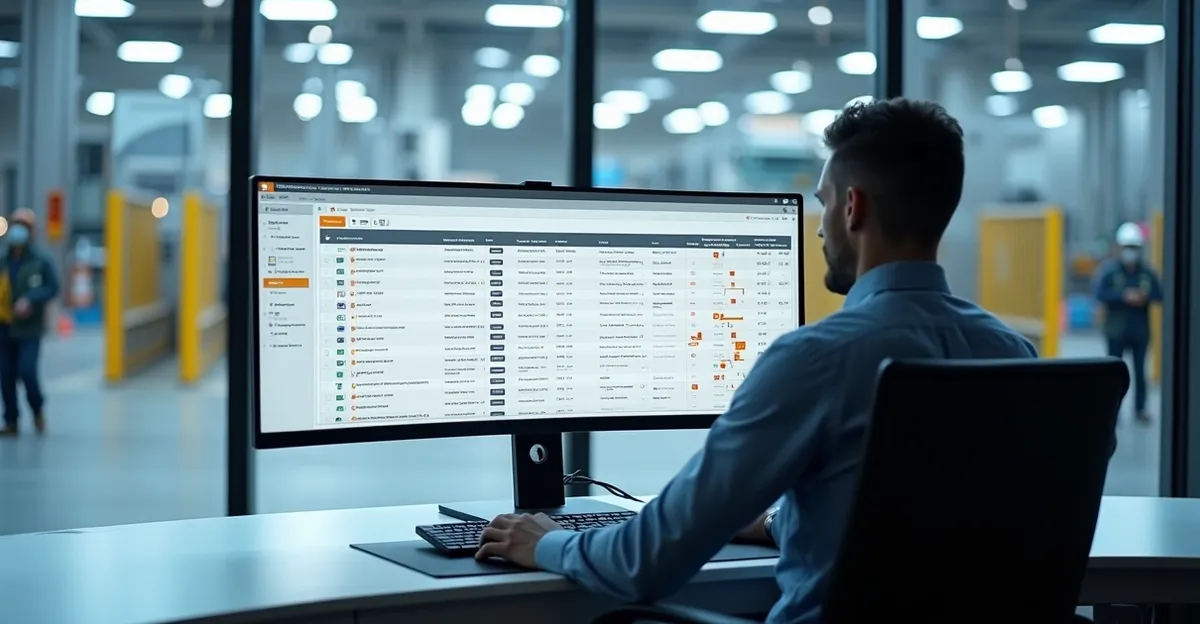
Real-time tracking is fundamental, especially in large operations. Systems offer alert panels that make it possible to see the status of every third party at a glance and take decisions based on facts, such as suspending access, chasing document updates or planning refresher training.
- Visual filters easily identify suppliers in a risk situation
- Automatic reports point to histories of irregularities
- Direct links for submitting and approving new documents speed up corrections
With automation and clear dashboards, the manager gains control of the situation and can act before a problem becomes a crisis.
Practical tips for identifying irregularities in the system
Here are the main tips!
1. Keep registrations always up to date:
Establish regular procedures for checking and ask all contractors to update their data and documents periodically. That ensures the information is always accurate and compliant.
2. Implement automatic expiry alerts:
Configure your system to send advance notifications about critical deadlines. That way, both the company and the contractors will know when documents need renewing.
3. Use approval and rejection filters:
Make use of lists and dashboards to quickly identify pending or rejected documents, making it easier to manage and track irregularities.
4. Require traceability
Make sure every action taken in the system is recorded in detail. That not only allows more effective audits but also gives a clear view of each contractor's history.
5. Integrate registration with access control:
Implement a system that automatically blocks access for irregular contractors, releasing entry only once their registration status is regularized. That increases the security of your operation.
6. Track indicators and reports:
Develop a routine of analyzing the data available in the panels, enabling proactive, preventive action in the face of any irregularities detected.
7. Offer self-service to suppliers
Make it easy for contractors to update their own information, reducing rework for the internal team and speeding up documentation flows in the system.
Identifying the irregular contractor became far simpler and safer once digital systems are used strategically. Document control, traceability and direct integration with physical access create an environment where risk situations are quickly identified and resolved, avoiding labor, tax and reputational impact.
By adopting practices such as complete registration, proactive monitoring and automatic validation, the manager finds a balance between security, speed and compliance. Using digital tools correctly turns risk into an opportunity for improvement and sustainable growth.
If this content helped you understand more about detecting irregular contractors, share it on social media and contribute to a culture of security and responsibility!
Frequently asked questions
What is an irregular contractor?
An irregular contractor is one that does not meet all the legal, registration or operational requirements needed to work at a company. That includes missing up-to-date documentation, failure to meet labor or tax obligations and the absence of specific permits.
How do you identify irregular contractors in the system?
Identification comes from cross-referencing information in management systems, automatic filters for outstanding items, checking digitized documents and integrating registrations with access control. Real-time alerts and reports guide the manager on any problem detected.
What are the risks of hiring an irregular contractor?
Hiring suppliers outside the rules can create labor liabilities, social security and tax charges, and can affect the physical security and reputation of the operation. It also exposes the company to fines and restrictions in external audits.
Where can irregular contractors be reported?
Serious or suspicious cases can be reported to labor inspection bodies, local authorities, unions and the internal compliance and ethics channels of the contracting companies.
How do you bring an irregular contractor into compliance?
Regularization requires updating the mandatory documents in the system, correctly submitting the required certificates and bringing all registration relationships into order. After review and approval, the status becomes fit for operation.